Ultimate goal
Compile a requested anatomy into a compact seed and a local rule that can grow, maintain, and repair it.
Inspired by Michael Levin's work on target morphology, the anatomical compiler turns a biological question into an engineering goal: specify a desired self-organizing body, then discover a compact seed and local rules that reliably grow, maintain, and repair it. Flow Lenia provides a tractable world for building the first prototypes. We test three search modes here: matching developmental measurements, maintaining a supplied form, and recovering Orbium's hidden parameters from a mature field.
The compiler's output is a developmental program: a compact seed and local rule that grow the requested form, maintain it while it acts, and restore its organization after perturbation. Ultimately, the target should describe a reliable developmental basin, so changed starts and moderate damage still converge on the requested anatomy. We therefore examine geometry, trajectories, function, and robustness as distinct parts of the specification.
Each Flow Lenia rule in this analysis has 40 parameters. We ran 5,000 distinct rules and described each stable result with 15 measurements covering body form, mass, energy, and movement. We then asked how much those measurements narrow down the rule that produced them.
Although each rule has 40 parameters, the sampled rules vary along about 25.5 independent directions. Their 15 measured outcomes vary along only about 5.9. The 19.6-direction gap is a coarse estimate of the rule variation available within a measured region of body space. A second calculation estimated a similar gap of 20.9 directions.
A neighbor analysis found the same breadth. Rules that produced nearby measured bodies were separated by 98.6% of the distance between randomly paired rules. The compiler can exploit these alternatives: propose several rules, run them, and choose according to the anatomy, stability, or behavior specified by the target.
Compile a requested anatomy into a compact seed and a local rule that can grow, maintain, and repair it.
Rules producing nearby measured bodies remain almost as far apart as random pairs.
Generate several candidates, run each one, and choose with criteria suited to the target. The three approaches differ in what the target specifies and which variables can change.
Phenotype space contains the measurements made on each body. We call the set of rules that produce similar measurements a fiber. A large fiber means that the body measurements constrain the generating rule only loosely.
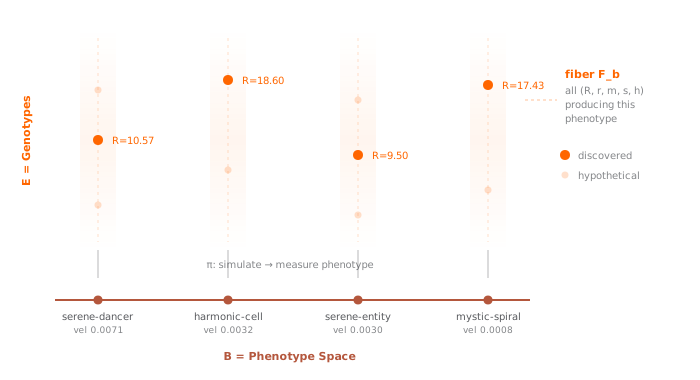
Each point below represents a set of body measurements. The rules compatible with those measurements form the vertical set above it. The geometry is illustrative rather than measured.
reused schematic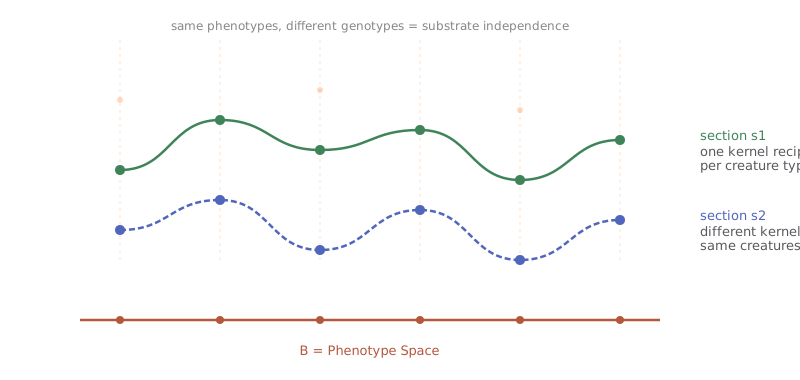
Because several rules can fit the same target, the system needs a policy for choosing among them. Different policies may select rules with different unmeasured dynamics.
reused schematic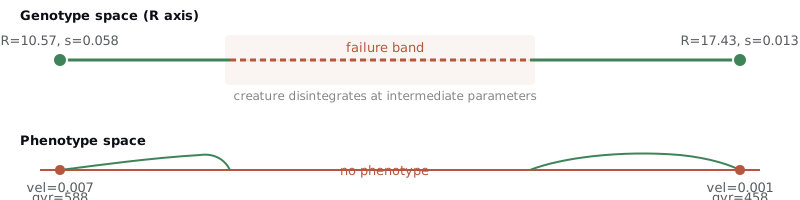
A smooth change in rule parameters can still pass through a region where no viable body develops. Search therefore has to preserve viability as well as reduce distance to the target.
reused schematicFigures 01A–01C are conceptual diagrams. Figures 02–04 are generated from the frozen anatomical-compiler results.
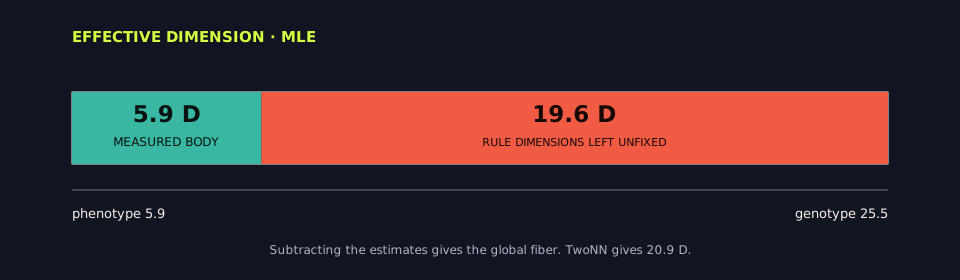
The corpus occupies about 25.5 intrinsic rule dimensions and 5.9 intrinsic phenotype dimensions. Their 19.6-dimension difference is estimated from the geometry of the samples; it is not the raw count of 40 parameters minus 15 measurements.
5,000 forms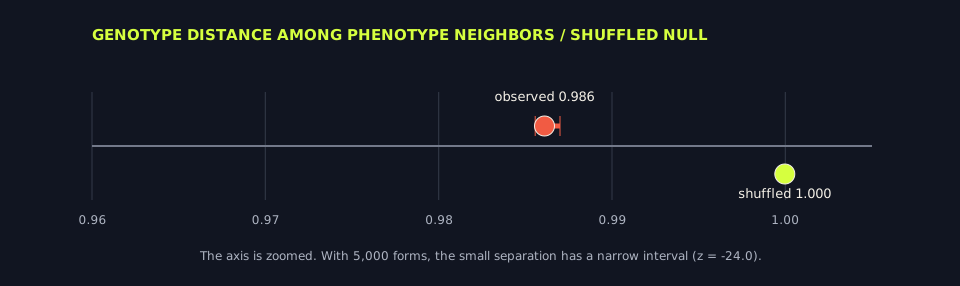
The ratio is 0.986, where 1.0 means that nearby measured bodies are no closer in rule space than shuffled pairs. The difference from 1.0 is detectable, but it is small.
cohort diagnostic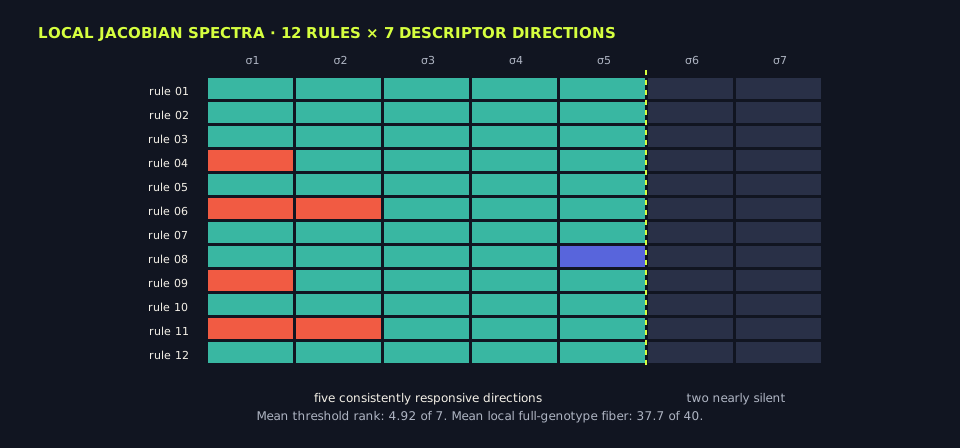
This local test perturbed 12 rules and followed seven descriptors. About five response directions crossed the threshold, but most sensitivity was concentrated in roughly 2.3 effective directions.
12 local probesThe 19.6 and 37.7 dimension estimates answer different questions. The first compares the global intrinsic dimensions of the 5,000-rule corpus and its 15 measured outcomes. The second subtracts the effective rank of a seven-descriptor local response from the full 40-parameter rule. Both indicate substantial ambiguity and should not be compared numerically.
All three searches use forward simulation. The target may be a handful of measurements, a complete spatial field, or an observed field from a known rule family. Each target defines a different success criterion.
Search for a rule whose trajectory has the requested mass, occupied area, variation, and spatial spread.
Use the requested spatial field as the initial condition and search for a rule that keeps it coherent and active.
Keep the rule family and starting cells fixed, then fit the unknown parameters to an observed field.
R, m, and sChoose measurements, a spatial field, or a known-family observation. That choice determines what a successful result means.
approach-specificRetrieve nearby rules, sample a conditional model, or draw values from a declared parameter range.
proposal stageRun every candidate forward and compare its measurements or field with the target.
forward rolloutsConcentrate the next search around the better candidates, then replay the selected rule beyond the scored interval.
validationThe results below test parts of this system. The conditional proposal check used eight samples across two targets. The refinement result used four targets. The MLX and Swift comparison covered one rule, one starting field, and six steps.
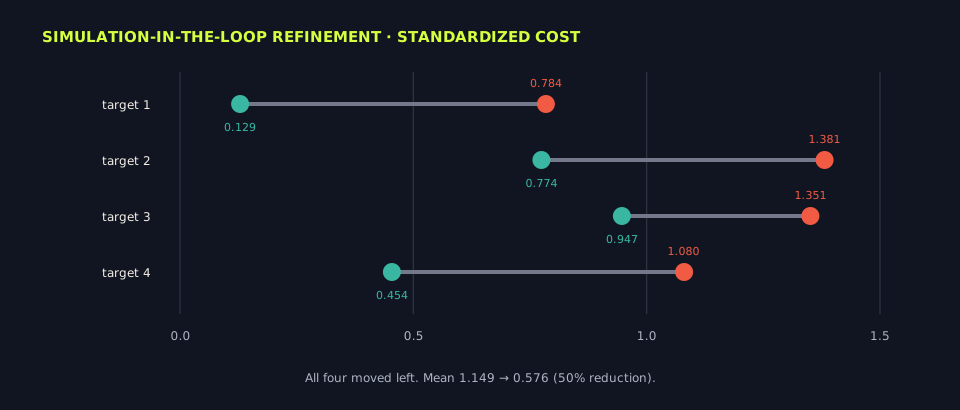
Lower is better on this standardized descriptor distance. Refinement improved all four targets, reducing the mean from 1.149 to 0.576, although one target still ended at 0.947.
four targets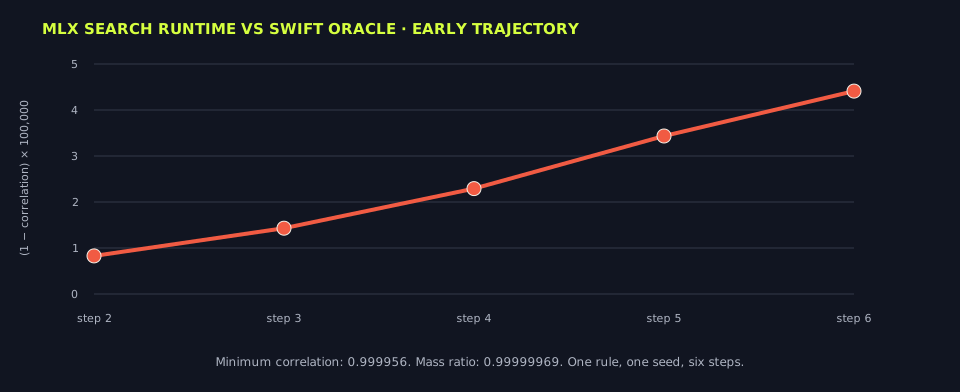
For one genotype and initialization seed, MLX and Swift remained closely aligned through step six. This check covers the beginning of one trajectory.
implementation checkSpecimen 2876 was selected from the 5,000-form corpus because its developed body is compact, tapered, and easy to recognize. The search receives four measurements from its 1,200-step trajectory. It does not receive the target images.
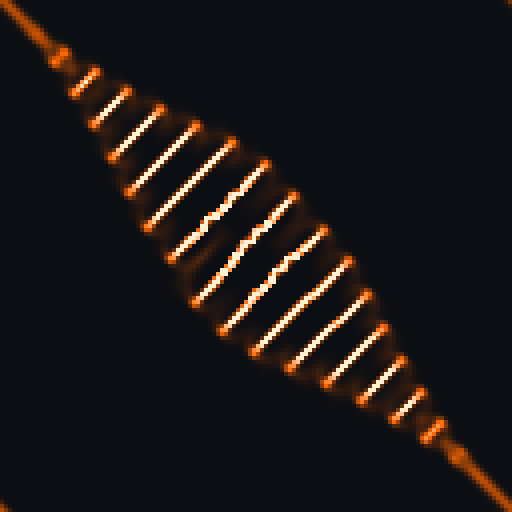
The fitted organism reproduces several bulk measurements, yet its anatomy is visibly different. The segmented structure shows how much body-plan variation remains when the target specifies only four measurements.
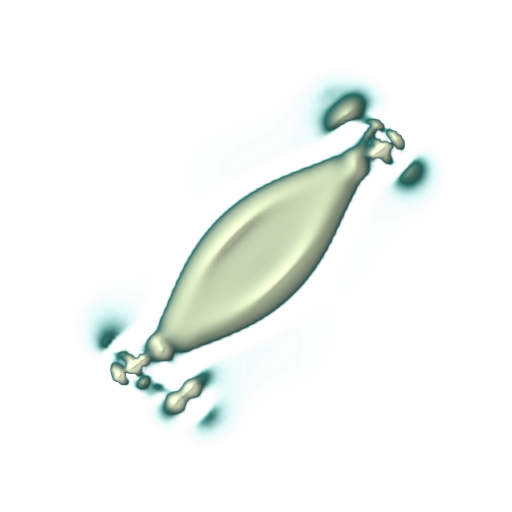
The body changes as it develops, so a single frame misses part of the phenotype. The target measurements cover the full trajectory.
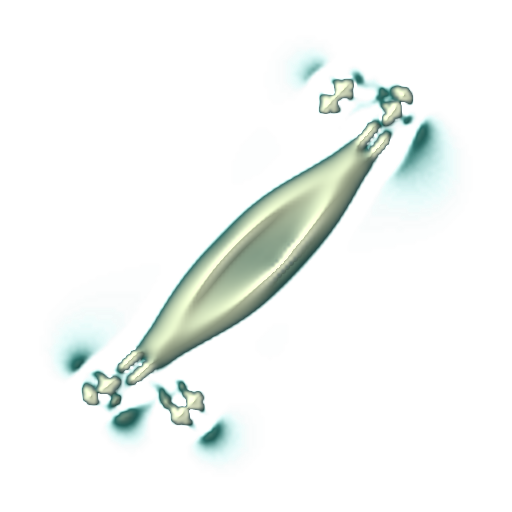
Mass, mass variation, occupied area, and gyration, a measure of spatial spread, define the request. Orientation, segmentation, topology, and locomotion are absent from the target.
| measurement | target | fitted |
|---|---|---|
| mass | 799.9 | 791.1 |
| occupancy | 11.7% | 10.5% |
| gyration | 1005.0 | 1152.8 |
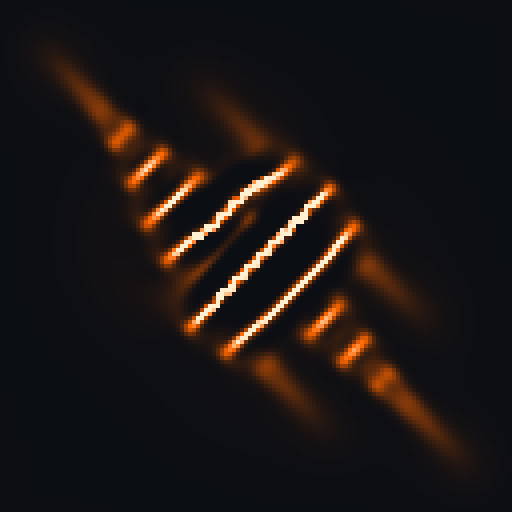
The target specimen itself was excluded from retrieval. The search finds twelve other corpus entries with nearby measurements, simulates them, and starts from the lowest-cost proposal. This is one leave-one-out example, not a cohort evaluation.
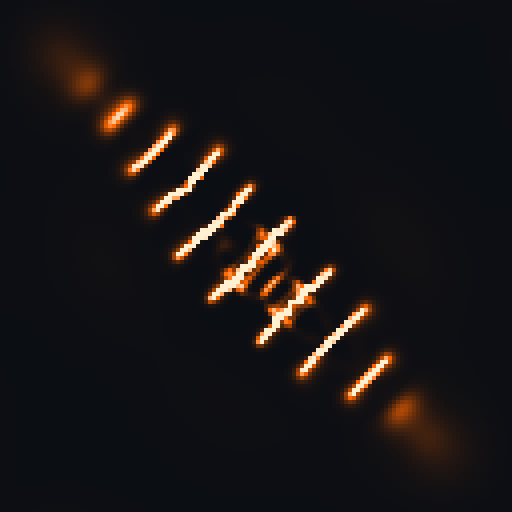
Six generations of 32 candidates reduced the MLX descriptor cost from 6.99 to 5.26, a 25% decrease. A separate Swift replay measured a standardized cost of 0.975. The two values come from different forward implementations and are reported separately.
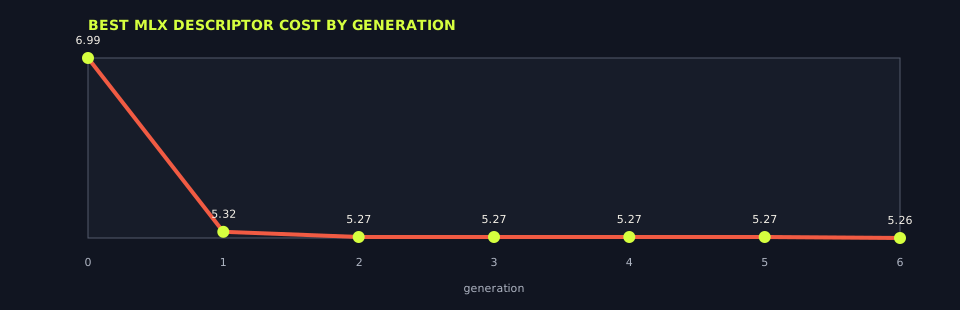
The largest improvement occurred in the first generation. Later generations changed the rule only slightly under the MLX objective.
6 × 32 rollouts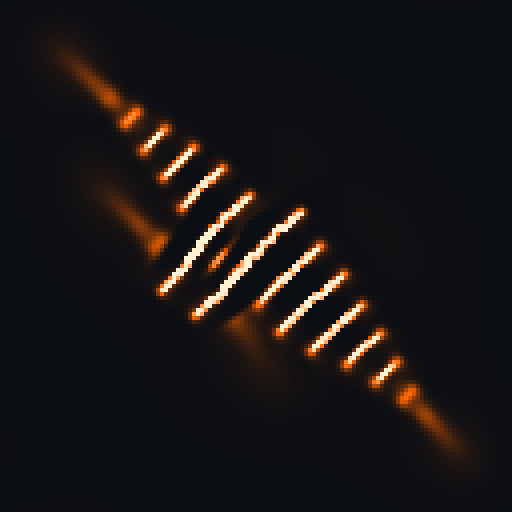
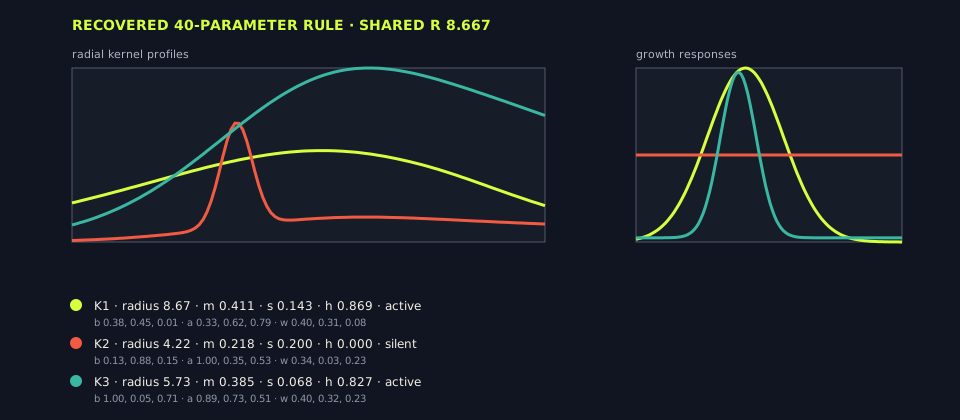
The fitted genotype contains one shared radius and three kernel blocks. Each block specifies a radial profile and a growth response. The second kernel has zero growth height in the selected rule, so two kernels drive the final dynamics.
40 parametersThe target and recovered trajectories have similar mass and occupied area, but their late bodies remain visibly different. Segmentation and pixelwise structure are absent from the objective, so they have no effect on the score.
The source trajectory retains one dominant tapered body with peripheral material.
target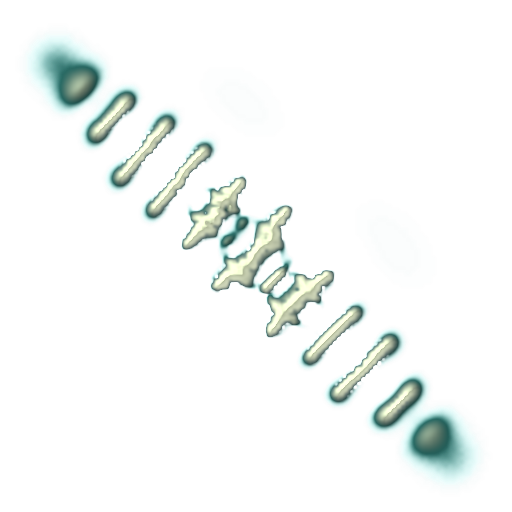
The fitted rule distributes similar mass across a repeated segmented arrangement.
fittedIn this experiment, the target is a body taken from the dataset, and its complete field is also the initial condition. Candidate rules are judged by whether that field remains coherent, active, and topologically similar during the recorded rollout.
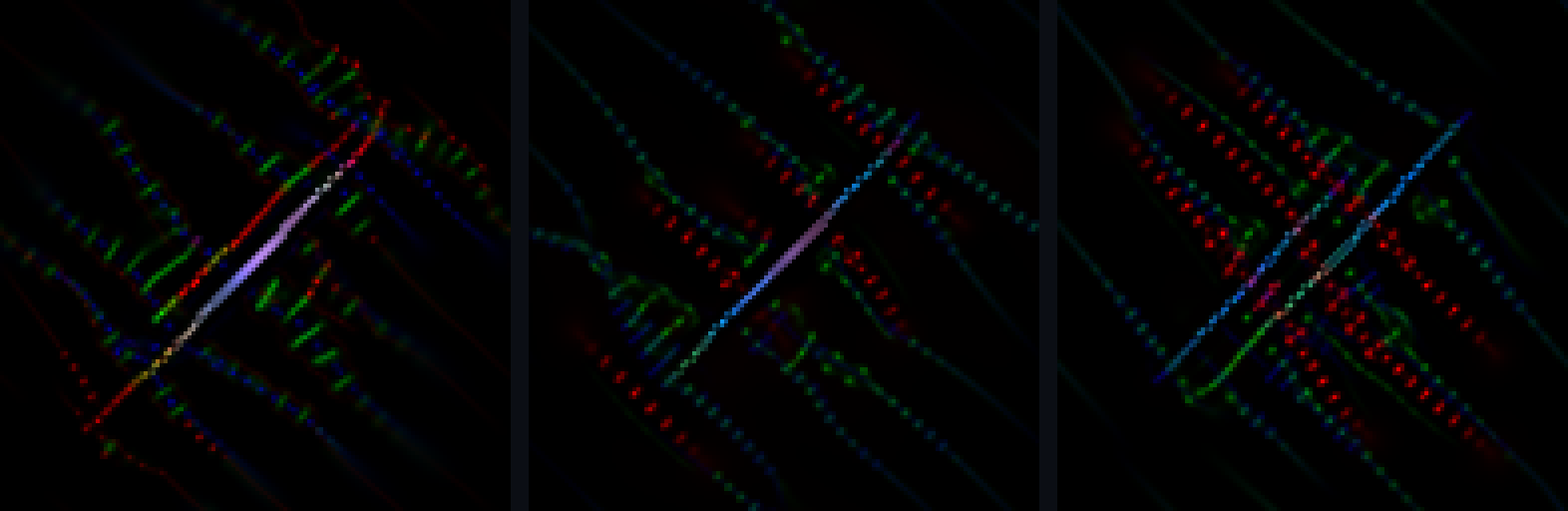
The center panel tests the actual objective: whether the fitted rule maintains the supplied field. The right panel asks a separate question. Starting the same rule from generic noise produces a coherent body, but not the requested anatomy.
one form demoThis experiment solves maintenance: the fitted rule holds an existing anatomy together. The full compiler must also discover a compact starting pattern and the rule that develops it into the requested body.
This experiment isolates within-family parameter recovery. We supplied Orbium's update law, kernel, growth function, and starting cells, then hid three numerical parameters: the interaction radius R, growth center m, and growth width s. The search evaluates values by comparing each simulated body with the reference at step 600.
The search uses the native qd24_additive_v1 update and Orbium's one-kernel geometry. Other update laws and kernel layouts are not considered.
The search starts from R=10, m=0.12, and s=0.024. These values disperse the initial cells into a ring and small fragments.
The first stage evaluates 2,688 parameter combinations. Every candidate runs for 600 steps.
28 × 96 rolloutsThe second stage evaluates 1,152 candidates near the broad-search winner. The selected rule is then run to step 1,200.
12 × 96 rollouts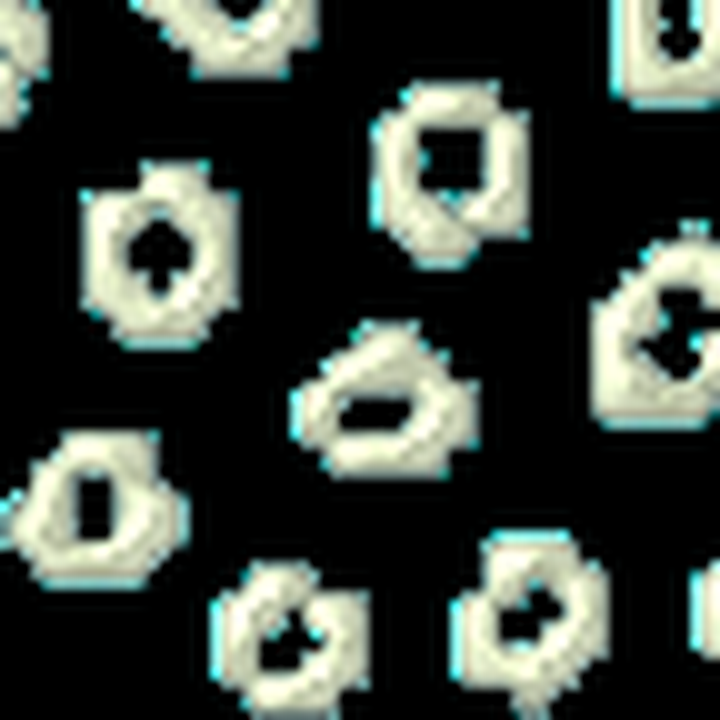
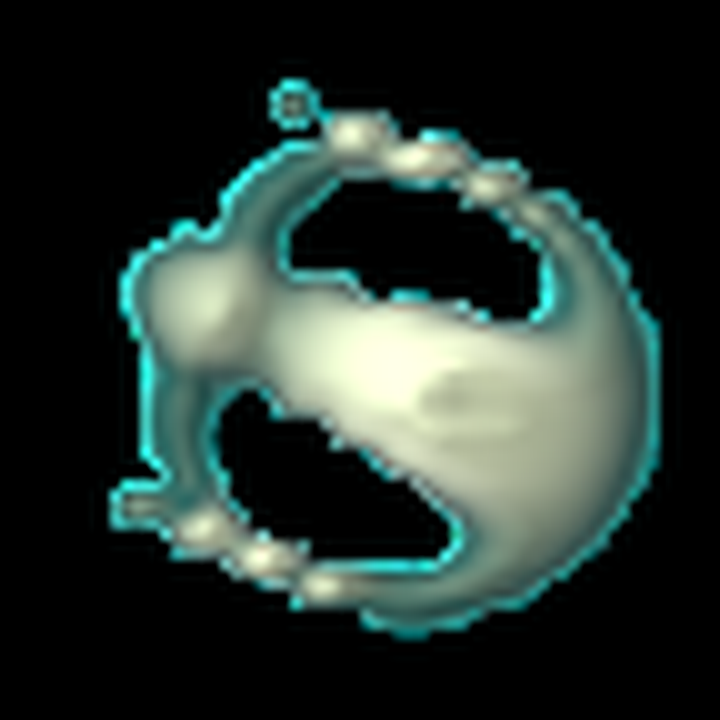
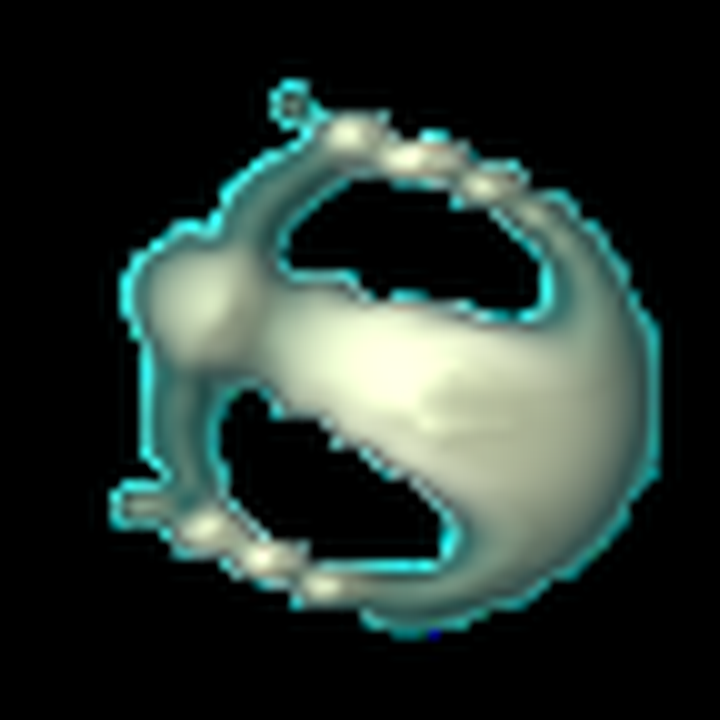
The initial parameters fail. The fitted parameters produce a close reconstruction. Each candidate is simulated for 600 steps, then its complete field is compared with the reference field.
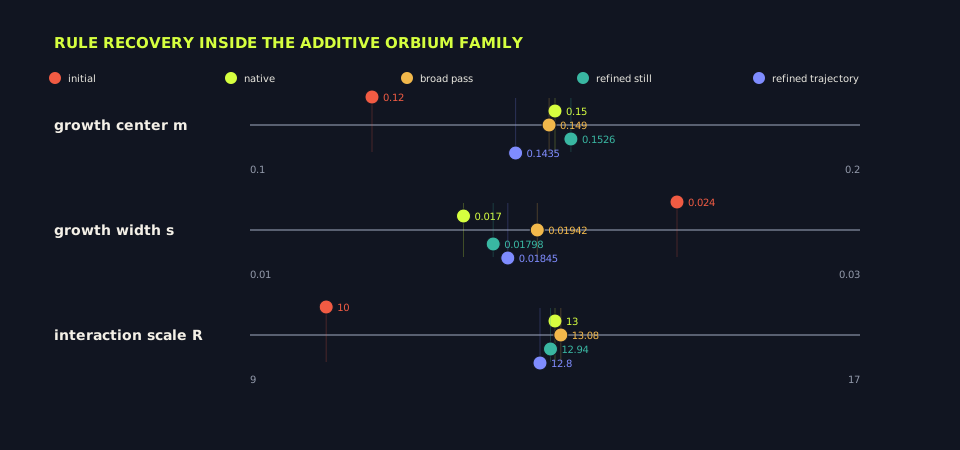
The narrow second stage improved the field match from 0.878 to 0.969 and brought all three hidden values close to the native rule.
broad search → local refinement



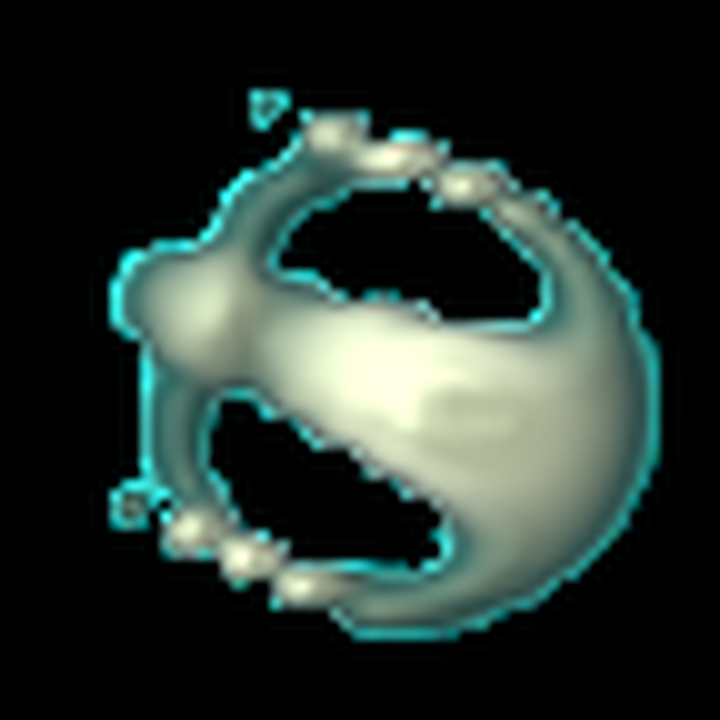

The fitted parameters also produced a coherent body at the unscored steps. This experiment isolates parameter recovery by supplying the update family, kernel geometry, growth function, starting cells, and elapsed time.
A control search used steps 100, 300, and 600. It returned R=12.80, m=0.1435, and s=0.0185. Its replay also remained coherent through step 1,200.
Both runs used the same broad and refinement budgets. The three-frame run ended farther from the hidden values than the run scored only at step 600. This is one organism, so it does not establish that single-frame targets are generally better.
We measured six behaviors in 8,174 creatures and reduced them to principal axes. The first axis is dominated by speed, path length, displacement, and center velocity, so we call it locomotion. The second is dominated by energy and temporal variance, so we call it activity. Together they account for 87.2% of the behavioral variation.
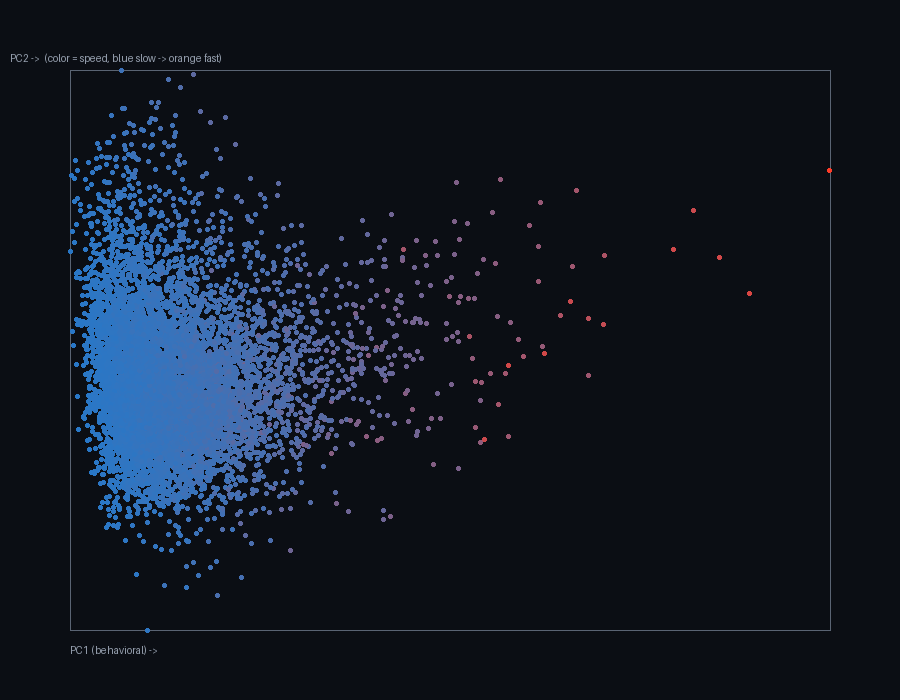
Most creatures occupy a dense low-speed region, while fast locomotion forms a sparse tail. Any model trained on this distribution will see many more slow examples than fast ones.
8,174 creaturesOccupancy and spread helped predict activity. The same shape measurements explained only 3.8% of the locomotion axis. Matching form measurements does not determine how the result will move.
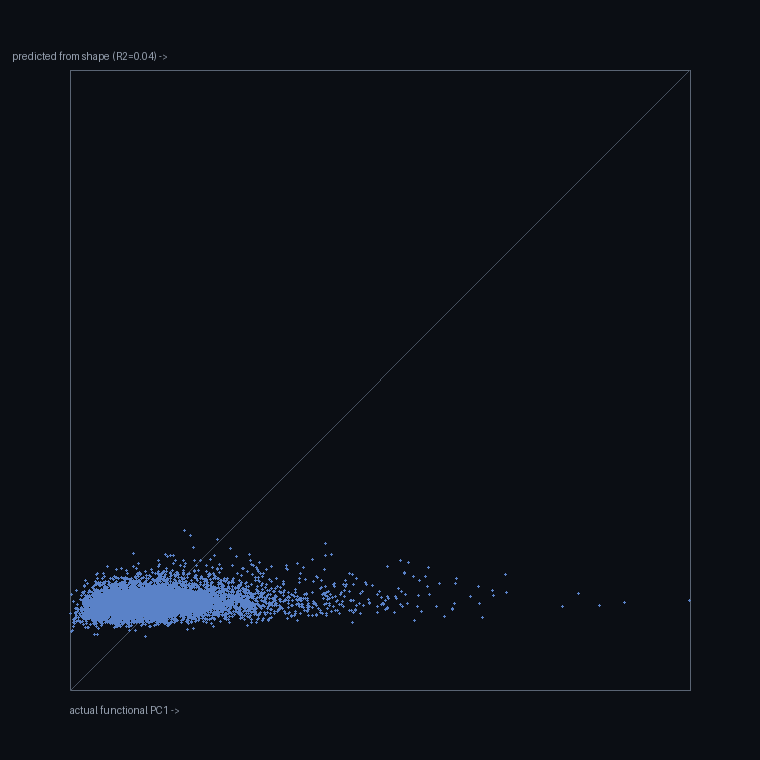
Activity predictions cluster near the diagonal. Locomotion predictions remain compressed near the bottom of the plot.
descriptive regressionWe fitted a potential surface to the regions where trajectories ended, then compared its downhill direction with their observed motion. The alignment was weak. In a separate perturbation test, five of eight genotypes became more dispersed over time. These results give no evidence that a selected rule will correct perturbations or converge from nearby starts.
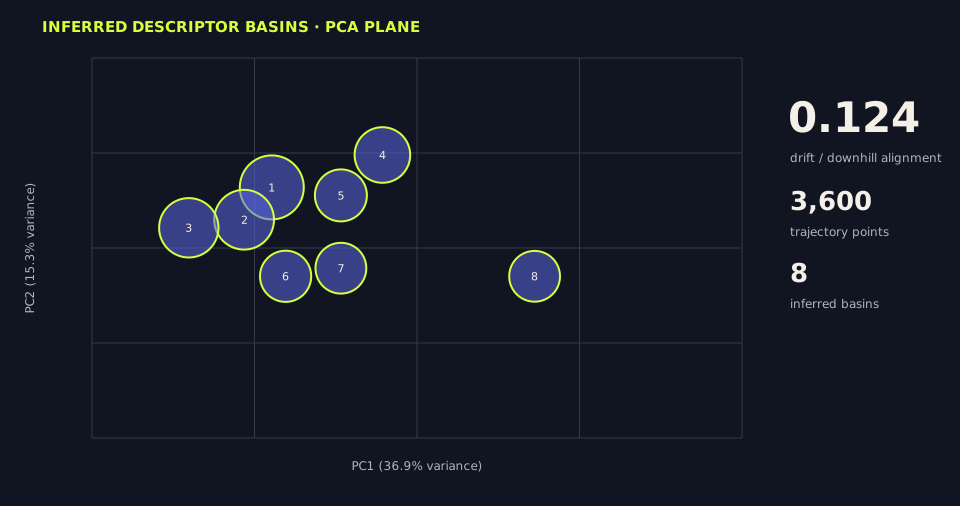
Across 3,600 trajectory points, observed drift aligned with the fitted downhill direction by 0.124. An alignment of 1 would follow the fitted landscape exactly; zero would show no preferred alignment.
descriptive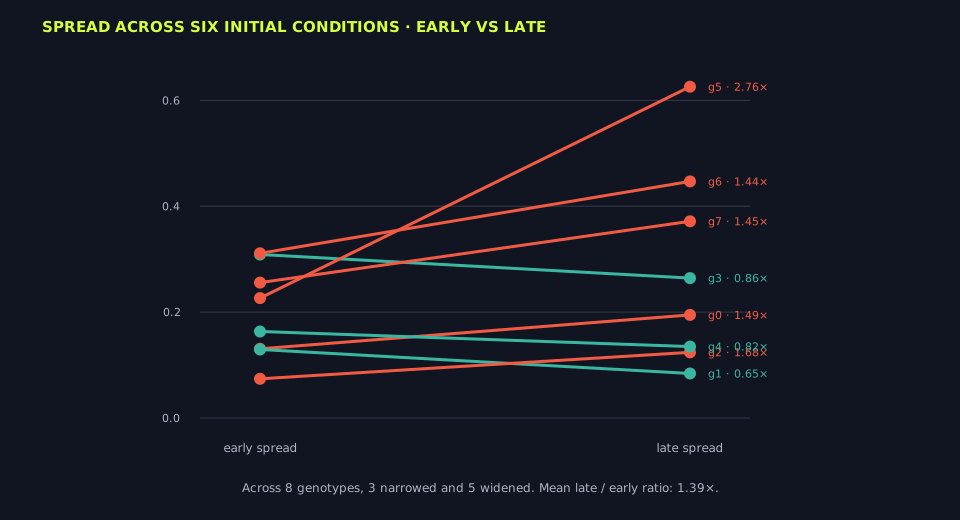
Three rules narrowed the differences between their six initial conditions, while five widened them. The mean late-to-early spread ratio was 1.39, where values above 1 indicate divergence.
8 × 6 rolloutsBulk shape was much more repeatable than motion across starting conditions. Across the same six initial conditions, mean variation was 2.5% for shape and 51% for motion. A rule can produce a broadly consistent form while leaving its trajectory highly contingent on the start.
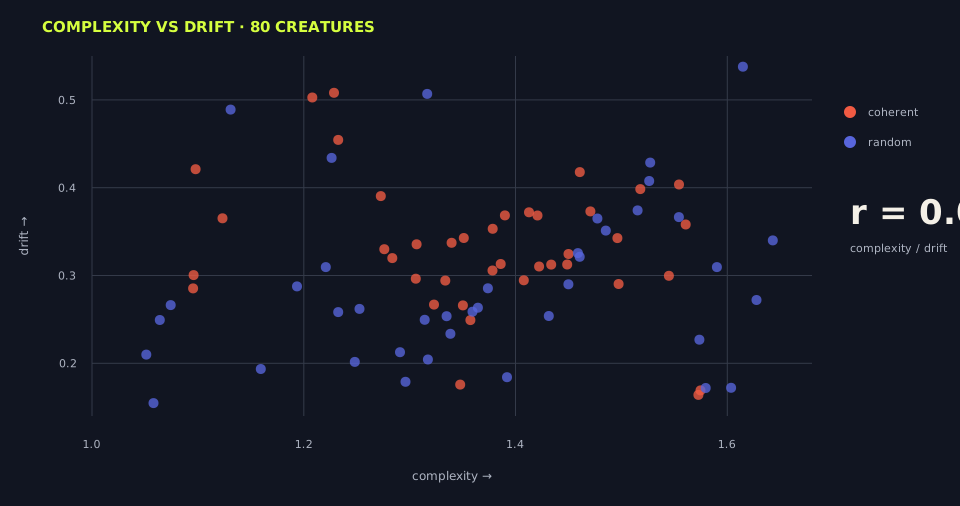
Across 80 creatures, complexity and drift had a correlation of r = 0.045. In this sample, visual complexity provided almost no information about whether a body would remain near its initial location.
80 creatures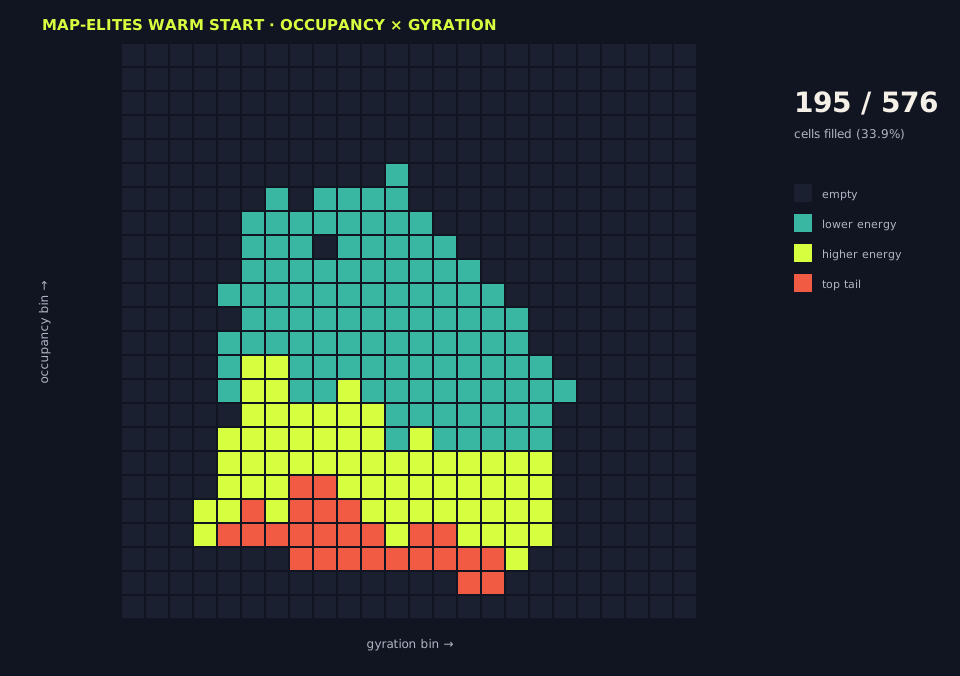
The warm-start archive occupied 195 of 576 cells (33.9%). The empty regions show body measurements for which this corpus offers no direct proposal.
proposal coverageA full system will connect them: describe a target through geometry, function, and development; explore the many rules that can produce it; then search jointly for a compact seed and a rule whose development remains reliable after changed starts or damage.
The ledger records the source for every number, specimen, replay, and reused schematic. SHA-256 identifies the exact bytes. The June files do not contain the revision that produced those historical results; the September case-study entries include their exact configs and media.
| Kind | Source | Bytes | SHA-256 prefix |
|---|---|---|---|
| frozen artifact | stage1_fresh_fiber.json | 1,424 | 1fcae1ea8b1613f7… |
| frozen artifact | stage1_jacobian_fiber.json | 4,632 | 9e5e975176e31401… |
| frozen artifact | stage2_cinn.json | 1,244 | d5ecd3b9f31ca5b6… |
| frozen artifact | stage3_refine.json | 551 | be159631b5f0097f… |
| frozen artifact | compiled/demo1/result.json | 1,930 | cf085fb32904ed5f… |
| frozen artifact | compiled/demo1/target.png | 18,649 | de6ebc2862bb8589… |
| frozen artifact | compiled/demo1/creature.png | 16,356 | 53dcf3f8d11f758a… |
| frozen artifact | compiled/demo1_cinn/result.json | 1,889 | a9f5988e1fa3c754… |
| frozen artifact | compiled/demo1_cinn/creature.png | 15,957 | 58e787e1bf2451f2… |
| frozen artifact | compiled/form_demo/result.json | 6,826 | 044567fdf4ea014c… |
| frozen artifact | compiled/form_demo/form_compile.png | 66,658 | b3b03d35b8af0ba2… |
| frozen artifact | mlx_validation.json | 1,039 | 79316f3cb993eef9… |
| frozen artifact | qd_archive/archive.json | 350,936 | 614a1919941427fd… |
| frozen artifact | qd_archive/coverage.png | 2,321 | a6ed57c87e362506… |
| frozen artifact | waddington_flow.json | 2,141 | 6537452489f02b52… |
| frozen artifact | canalization.json | 2,357 | c5a5924d1ae5c946… |
| frozen artifact | functional-morphospace/functional_morphospace.json | 1,685 | e8f6e4b61b319865… |
| frozen artifact | functional-morphospace/shape_function_coupling.json | 1,398 | b9923f08f942351a… |
| frozen artifact | functional-morphospace/functional_morphospace.png | 65,958 | 52f66e8726ea151a… |
| frozen artifact | functional-morphospace/shape_predicts_function.png | 13,462 | 101f3f6ed749b081… |
| frozen artifact | 3c15/functional_map_mlx/functional_map.json | 9,209 | e69a9cec67faaa34… |
| frozen artifact | 3c15/functional_map_mlx/bodies_montage.png | 139,541 | 55b2a1b2466e1bab… |
| reused explanatory schematic | site/assets/blog/lenia-morphospace-report/fig-fiber-bundle.svg | 4,621 | 43000b7e7db2b7c0… |
| reused explanatory schematic | site/assets/blog/lenia-morphospace-report/fig-sections.svg | 4,182 | 569fec81d4c9dd71… |
| reused explanatory schematic | site/assets/blog/lenia-morphospace-report/fig-bridge-genotype-phenotype.svg | 3,035 | 363d5905c657c2e8… |
| 2026-09-01 case-study rerun | compiled/descriptor-organic-2876-final/result.json | 15,065 | b5076bb598eb5baa… |
| 2026-09-01 case-study rerun | compiled/organic-2876-trial/result.json | 7,625 | c1193ac52130e294… |
| 2026-09-01 case-study rerun | media/organic-2876/target-base.json | 1,890 | 96712d27919bb1b9… |
| 2026-09-01 case-study rerun | media/organic-2876/recovered-base.json | 2,145 | 7e61c204d374891b… |
| 2026-09-01 case-study rerun | media/organic-2876/search.json | 1,051 | 8b5d8113be1a7d28… |
| 2026-09-01 case-study rerun | media/organic-2876/target-body.mp4 | 561,891 | e70259f567a5b091… |
| 2026-09-01 case-study rerun | media/organic-2876/recovered-body.mp4 | 957,390 | 9b42766440cf423b… |
| 2026-09-01 case-study rerun | media/organic-2876/target-run/anatomical-target-2876/frames_color/frame_000600.png | 108,733 | 7396b4565167a62f… |
| 2026-09-01 case-study rerun | media/organic-2876/target-run/anatomical-target-2876/frames_color/frame_001190.png | 122,830 | 676f2be888b9ae58… |
| 2026-09-01 case-study rerun | media/organic-2876/recovered-run/anatomical-recovered-2876/frames_color/frame_000600.png | 174,617 | b136b78fcb83bd47… |
| 2026-09-01 case-study rerun | media/organic-2876/recovered-run/anatomical-recovered-2876/frames_color/frame_001190.png | 121,202 | da36d4748bdf8ecb… |
| 2026-09-01 case-study rerun | compiled/descriptor-organic-2876-final/trace-00.png | 17,882 | fa03595c4170e155… |
| 2026-09-01 case-study rerun | compiled/descriptor-organic-2876-final/trace-01.png | 15,293 | 1c4156380fc3ec66… |
| 2026-09-01 case-study rerun | compiled/descriptor-organic-2876-final/trace-02.png | 14,439 | 8a31ce5df13ad3bb… |
| 2026-09-01 case-study rerun | compiled/descriptor-organic-2876-final/trace-06.png | 14,818 | 67ef9c151f42f916… |
| 2026-09-01 case-study rerun | compiled/organic-2876-trial/target.png | 13,121 | 47aac3a2842dedcf… |
| 2026-09-01 case-study rerun | compiled/organic-2876-trial/creature_swift.png | 11,834 | 2eb60b71e7951b21… |
| 2026-09-02 within-family Orbium inverse | orbium-system-id-v5/experiment.json | 1,284 | e7d17cd2fca63593… |
| 2026-09-02 within-family Orbium inverse | orbium-system-id-v5/still-es.json | 197,817 | c8262451e333bf09… |
| 2026-09-02 within-family Orbium inverse | orbium-system-id-v5/still-run/best.json | 141 | 2e99f52c9591bc8c… |
| 2026-09-02 within-family Orbium inverse | orbium-system-id-v5/still-run/history.jsonl | 12,161 | 540933e403833518… |
| 2026-09-02 within-family Orbium inverse | orbium-system-id-v5/trajectory-es.json | 591,583 | dbb42ebb131bbec6… |
| 2026-09-02 within-family Orbium inverse | orbium-system-id-v5/trajectory-run/best.json | 143 | 97902a5fa38d9c4f… |
| 2026-09-02 within-family Orbium inverse | orbium-system-id-v5/trajectory-run/history.jsonl | 12,205 | b3d53ac97bb5e77a… |
| 2026-09-02 within-family Orbium inverse | orbium-system-id-v5/report-assets/orbium-initial-600.png | 255,120 | 040ffb2271b6a55b… |
| 2026-09-02 within-family Orbium inverse | orbium-system-id-v5/report-assets/orbium-inverse-summary.json | 1,271 | 904916197598ed88… |
| 2026-09-02 within-family Orbium inverse | orbium-system-id-v5/report-assets/orbium-rule-recovery.svg | 6,418 | a0125a9a26e7e89b… |
| 2026-09-02 within-family Orbium inverse | orbium-system-id-v5/report-assets/orbium-still-100.png | 187,493 | 88843f7bf4824041… |
| 2026-09-02 within-family Orbium inverse | orbium-system-id-v5/report-assets/orbium-still-300.png | 186,697 | b7b91bc0d08bd62f… |
| 2026-09-02 within-family Orbium inverse | orbium-system-id-v5/report-assets/orbium-still-600.png | 185,894 | e7eab62cced81915… |
| 2026-09-02 within-family Orbium inverse | orbium-system-id-v5/report-assets/orbium-still-1200.png | 189,664 | 4c4cdf26049b32a0… |
| 2026-09-02 within-family Orbium inverse | orbium-system-id-v5/report-assets/orbium-still-zoom.mp4 | 812,518 | 37933bf5d5c5bb09… |
| 2026-09-02 within-family Orbium inverse | orbium-system-id-v5/report-assets/orbium-target-100.png | 186,009 | 2befab83732f67c4… |
| 2026-09-02 within-family Orbium inverse | orbium-system-id-v5/report-assets/orbium-target-300.png | 187,779 | 2aacf01203662f32… |
| 2026-09-02 within-family Orbium inverse | orbium-system-id-v5/report-assets/orbium-target-600.png | 186,927 | e0ca77a833258f14… |
| 2026-09-02 within-family Orbium inverse | orbium-system-id-v5/report-assets/orbium-target-1200.png | 186,735 | 2d39c4a8ffcb94ed… |
| 2026-09-02 within-family Orbium inverse | orbium-system-id-v5/report-assets/orbium-target-zoom.mp4 | 834,738 | 12c499769fe12ce6… |
| 2026-09-02 narrow Orbium refinement | orbium-system-id-v6-refine/refine-es.json | 197,819 | 7bcda98c84215935… |
| 2026-09-02 narrow Orbium refinement | orbium-system-id-v6-refine/refine-run/best.json | 143 | 43c2f254196e5526… |
| 2026-09-02 narrow Orbium refinement | orbium-system-id-v6-refine/refine-run/history.jsonl | 5,165 | e28679376dddcbf6… |
| 2026-09-02 narrow Orbium refinement | orbium-system-id-v6-refine/trajectory-refine-es.json | 591,585 | 840f48b9aab5b4be… |
| 2026-09-02 narrow Orbium refinement | orbium-system-id-v6-refine/trajectory-refine-run/best.json | 140 | 93cfbf398087a085… |
| 2026-09-02 narrow Orbium refinement | orbium-system-id-v6-refine/trajectory-refine-run/history.jsonl | 5,192 | 7b2bca59b1f57f3b… |
The June and September evidence have different provenance. The frozen June artifact JSON files do not record their source revision, so artifactProducingRevision remains empty. The September organic rerun and within-family Orbium inverse are listed separately with exact configs, results, frames, and videos. The complete machine-readable ledger is source-manifest.json.